Showing posts with label Photography. Show all posts

Saturday, April 13, 2024

2024 Total Solar Eclipse

Sun's Corona During Totality

We saw the eclipse; it was awesome!

It was quite the journey. Here's the GPS track, showing major stops. This was NOT what I had planned.

Route of Travel

Years ago, actually right after the 2017 eclipse, I started planning for the 2024 eclipse. I checked the historical weather maps and decided my best chance of clear skies along the path of totality would be in Texas. With about six months to go, my wife made a hotel reservation in Austin. Then I picked a couple of places near Austin as candidates to set up to watch and photograph the eclipse.

My wife took a flight to an event in Nashville the week before the eclipse, so we planned for me to drive and pick her up there enroute to Austin. By the time I reached Nashville on April 5, the forecast predicted overcast and rain for most of Texas, but clear skies in New England, so we cancelled the reservation in Austin and headed for New England. We stopped overnight in Ithaca to visit the city where my wife went to college. Then we went to Lake Placid because that was closer to New England and it was among the few places where we were able to get a hotel room. Then on the morning of April 8, the day of the eclipse, I checked the weather forecast one last time, and it looked like we needed to get beyond Burlington to the east for the best chance of clear skies. New Hampshire and Maine would have been better, but it's hard to travel east-bound in New England because there just aren't a lot of highways, so we went to Newport in Vermont. There was snow on the ground in Lake Placid and in northern Vermont.

When we arrived in Newport I chose Gardner Memorial Park as the place to watch the show. I picked a spot by the lake shore, set the cameras up, and waited under clear blue skies.

Camera Setup

Shortly Before Totality

Of course it didn’t stay completely clear. A thin cloud layer approached, and during totality we watched the eclipse through that thin layer. As it got dim, we could easily see Jupiter and Venus. Despite the clouds, we had a great look at the sun as it got cold, then dim, and during the final seconds before totality we saw the moon move to blot the sun out. We saw the corona and an enormous prominence with our naked eyes. I had one camera on a script, controlled by a computer, that snapped away. I had another camera that I shot manually, on a tripod, not looking at the camera at all, just using a remote trigger.

After totality, most people left. We waited for the end of the partial phase. After the eclipse ended, we checked traffic on the maps on our phones. Predictably, it was awful. I chose to avoid the interstate highway and instead took state highways to Burlington. There, we ran into traffic and slow going all the way to Glens Falls. When we finally got onto Interstate 87, traffic was very heavy but moving, and finally we stopped for the night at a hotel near the Albany airport. We returned home to Virginia the next day.

Here are a few shots of the eclipse.

Partial Phase with Sunspots
The shot above shows some large sunspots during the first partial phase.
Beginning of Totality
The shot above shows the beginning of totality, with prominences near the top of the photo, and just a hint of the large prominence at the bottom. The moon moved from bottom to top, with the top being the last part of the photosphere to be obscured, hence the prominences and glow at the top.

End of Totality
As totality ended, the moon moved to expose the bottom of the sun, showing some enormous prominences. We could see these with the naked eye. For reference, the large prominence on the lower left of the photo was several times the size of the Earth!

Baily's Beads
As the photosphere became visible, I got some fleeting Baily's beads.

Here’s my first/only attempt at a composite in Photoshop.
Composite
My wife’s family has vacation property in rural Maine. It’s inaccessible during the winter because of snow and the house is uninsulated, so, very cold. The path of totality did not pass over that property, but it did pass within a few miles. When I checked the historical cloud cover maps for April, I learned that there is often a lot of cloud cover. For those reasons, I never considered going to Maine for the eclipse. It turns out that they had fantastic clear weather. Maybe we could have gotten to the property through the snow, which by then was mostly melted. But I doubt it. Ironically the best place to watch was the place that I dismissed as infeasible.

So it was a lot of driving for only about three minutes of totality. And it was just as good as I remember from 2017. The next one in the US is a lot of years away. Maybe we’ll try for one in Australia.


Saturday, March 9, 2024

Plans for the April 8, 2024 Total Solar Eclipse

In 2017, I travelled with my wife and son to Grand Teton National Park to watch the total solar eclipse. I chose that spot after consulting a historical weather pattern map, concluding that it was a great place to watch with a high probability of clear skies. It was a fantastic experience. My son was a teenager at the time and dubious about the whole trip. At the end of totality, he turned to me and said, “Now I’m ready for the one in 2024.”

Unfortunately he won’t be with us this time; he’s in college. But my wife and I are going.

My photo of the 2017 eclipse

My photo of the 2017 eclipse

Again, I checked historical weather records for cloud cover along the path of totality. This time it’s not great. The best place within the US appears to be in Texas. So that’s where we’re going. If I can believe the weather projections, there’s a 50-50 chance of clouds.

It was ridiculously hard to get a hotel reservation last time. This time we were able to get a room in Austin. So I’m planning to stay there the night before the eclipse, and check the weather forecasts for the next day to decide where to watch the eclipse. Afterward, my wife and I will start the long drive home to Virginia, with no particular plan for where to spend the night.

I’m undecided with respect to the location at which to watch the eclipse. I’m generally hoping to find a location somewhere close to the center line of the path of totality between Waco and Fredericksburg. But of course a few million other people probably have the same idea. We could just drive to the general area and look for a place to set up. But I wanted something a little more concrete as an option, not wanting to be stuck on the road somewhere in traffic unable to find a suitable place. I need a place where I can linger for several hours with a clear view to the south and access to a bathroom. 

So I decided to make a day use reservation at a state park. I reviewed my options, selected several parks, made a rank-ordered list, and waited several weeks for the reservation window to open. I made an account on the web site. A few minutes before the window opened, I navigated through the reservation process up to the point where it was possible to actually make a reservation. I attempted to reserve at Lake Whitney, pressing the button seconds after the reservation window opened. The result: server error. Lots of others had the same idea. I tried repeatedly: more server errors, until all of the reservation slots were taken. It took less than a minute. I tried my second choice: Meridian State Park. I was able to make a reservation there. So I have a limited access location (hopefully not crowded), not on a highway, with bathrooms, where I can linger. It only cost me $10, so if I find a better place I’ll just abandon this plan.

I wanted a backup location. Meridian State Park looks like there isn’t a lot of room to park with a good view of the sky. I searched more. I made a reservation in Gatesville at the baseball field complex. There are parking lots, bathrooms, concessions, and not very many trees. I’m hoping I can get a good spot for a clear look at the sky.

I love a photographic challenge, and total solar eclipses are definitely a challenge. I need a better plan than I had in 2017. I got some acceptable results then, but I can do better now. I have better equipment. I have the experience of last time from which to learn. I’ve found better resources to help me make a better plan. Presuming I have a good location and sufficient time to set up, here’s my plan:

  1. Set up a GoPro to create a video of us as I go through the camera setup, wait for totality, watch eclipse, photograph all the way through the end of the partial phase, then tear down.
  2. Set up a DSLR on a tripod with a wide angle lens to capture the partial phases with an intervalometer. Switch to video right before totality; switch back to the intervalometer immediately after.
  3. Set up a second DSLR on a star tracker, use a laptop computer with a programmed shooting plan. Mostly ignore this one during the eclipse; let the automation do the job. The success of this one depends upon a good shooting script (using Eclipse Orchestrator) and a good polar alignment job. I tested the script and realized I needed a higher-capacity card. I’ve also practiced daytime polar alignment, with good results (the tracker keeps the sun centered).
  4. Set up a third DSLR on a tripod to shoot manually. This one is my best lens and my best camera. I’ll set an intervalometer to run during the partial phases so I only have to keep the sun in the field of view. During totality, and for the transitions into/out of totality, I’ll shoot manually, with a plan will leave a lot of time for me to just look at the sun.

So there’s my plan; now all I can do is hope for clear skies and trouble-free travels. In the meantime, I’ve practiced setting the cameras and computer and tracker up. I’ve discovered some issues that I’ve learned from. I know it won’t all go to plan, but I’m hoping I get it mostly right.

Wherever I end up, it won’t be as photogenic as in 2017, but that’s OK.

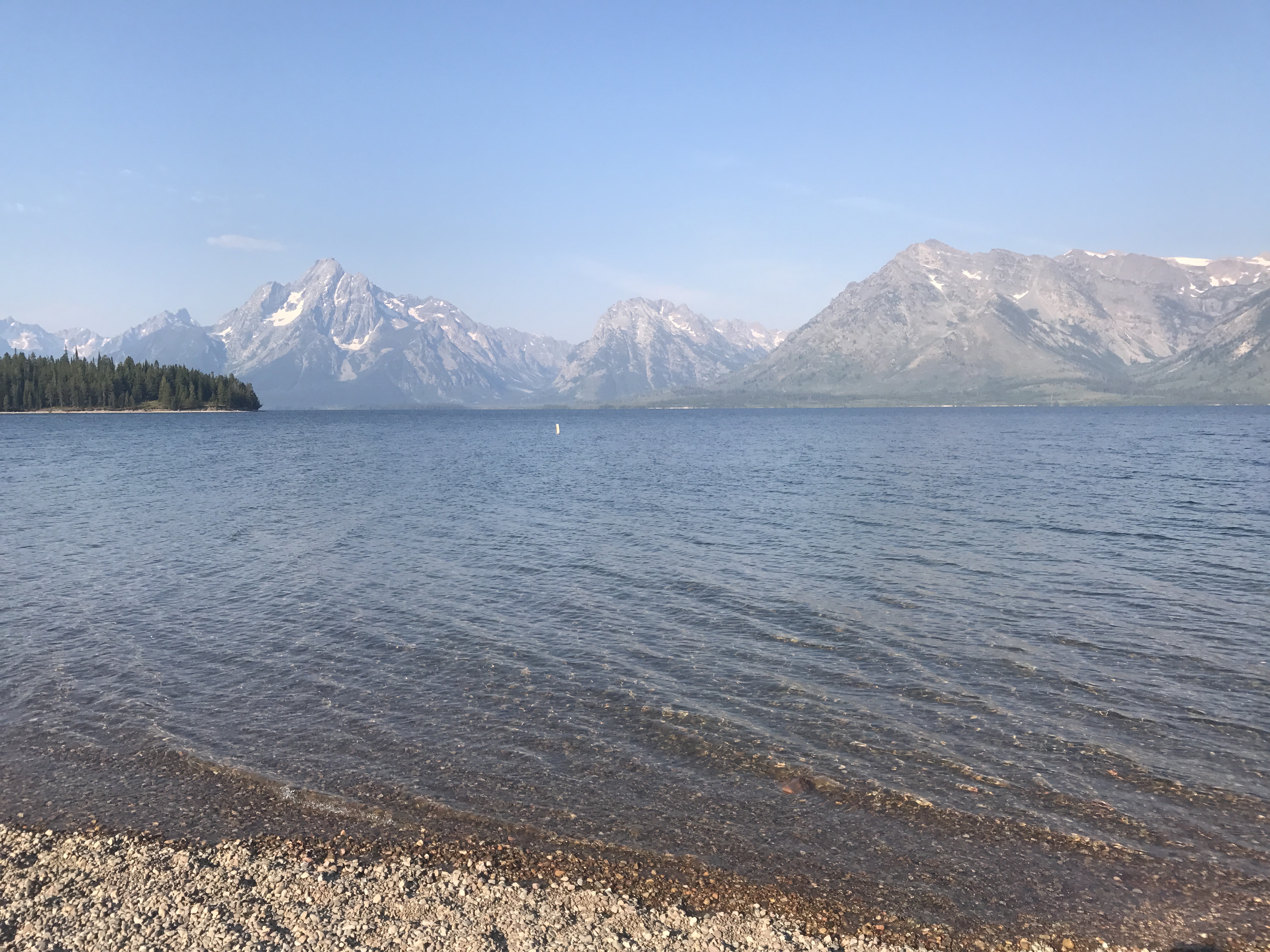
Our view while waiting for the 2017 eclipse

My son said it was cold that morning before the sun came up


Wednesday, August 15, 2018

Photography as a Passenger on a Cruise Ship

Should I Take My DSLR on a Cruise?

I recently took a cruise on the Crown Princess. This was my second cruise. My first was on the Pacific Princess from Vancouver Canada to Whittier Alaska. I used my camera a LOT in Alaska, shooting glaciers, wildlife, and landscapes/seascapes. But this trip was in the Mediterranean, and I wondered whether I'd see wildlife or good landscapes or cityscapes that I'd want to photograph.
Crown Princess
While packing for the trip, I researched the ports at which we were scheduled to dock. I researched cruise ship features in general. I checked blog posts made by other passengers on that specific ship. I read posts by photographer passengers on cruise ships in general. I wanted to have a good idea whether to bring my gear and what pieces to bring. Here's how it worked out.

First, I didn't buy the gear to leave it at home. Photography is my hobby, and I'm going to take advantage of any opportunity to enjoy it. The real question was, what should I bring?

I saw several threads debating this very topic. Some people said, leave the gear at home, the ship docks and leaves port at times when the light is poor. Implication: the photos will suck. And when ashore, it's always mid-day when the sun is blazing and the light is very harsh. Again: the photos will suck. And I found that in fact the lighting conditions often were poor. Nevertheless, I managed to get some good results by being thoughtful about when and what to photograph.

So what did I bring? My DSLR, 24-70, 70-200, 300, teleconverter, Gorillapod, GoPro Session, and several mounts for the GoPro. The only thing I never used was the teleconverter.

The 24-70 was useful for much of the time ashore. The 70-200 was absolutely the right lens for Gibraltar. The 300 was perfect for port arrivals and departures. And the GoPro was great for short videos fore and aft, along with port arrival/departure timelapses.
Gibraltar Macaque
Here's the general breakdown by port:
  1. Athens: 24-70 at the Acropolis, 300 and GorillaPod for night photography of the Acropolis from a nearby hill.
  2. Santorini: 24-70 ashore, 300 for port (aka caldera) departure.
  3. Kotor: 70-200 on the hike to the fortifications.
  4. Mt. Etna: 24-70
  5. Herculaneum: 24-70
  6. Gibraltar: 70-200: wide enough for landscapes at the cable car station, long enough for great shots of the macaques, long enough for shots of the town below and ships in the bay.
  7. Marseille: iPhone
  8. Genoa: iPhone
  9. Pisa/Florence: 24-70
  10. Rome: 24-70
The ship has a promenade deck that allows passengers to completely circle the ship while outside. Many shots were from this deck. There's also access to the roof of the bridge. That was perfect for photography during port arrivals and departures.

Our cabin had a balcony. I used my GoPro on the balcony for timelapses during port arrivals and departures. I'm still working on it, but I was able to put a nice series of timelapses together. It shows several ports. They really are all quite different from one another. There are big differences among ports in terms of size, facilities, piers and wharves, and maneuvers needed to get docked or to depart.

Alaska is a wildlife photographer's dream. The Mediterranean, not so much. Aside from the Gibraltar macaques and some seagulls, there was hardly any wildlife to speak of. I saw turtles in the Bay of Kotor and dolphins swimming in the ships wake a few times. I don't know if my experience is typical, but this was definitely not a place for wildlife, at least not on this trip.

Bottom line: I'm so glad I brought my gear. I would have regretted leaving the camera behind in Athens and Santorini and Gibraltar especially. It was worth hauling that gear around for the macaques alone. There's no way I would have been able to get the same results with my iPhone.